
Mother River Ganga: Exploring the Spiritual Heart of India (2026)
- Feb 11
- 3 min read
Updated: Apr 14

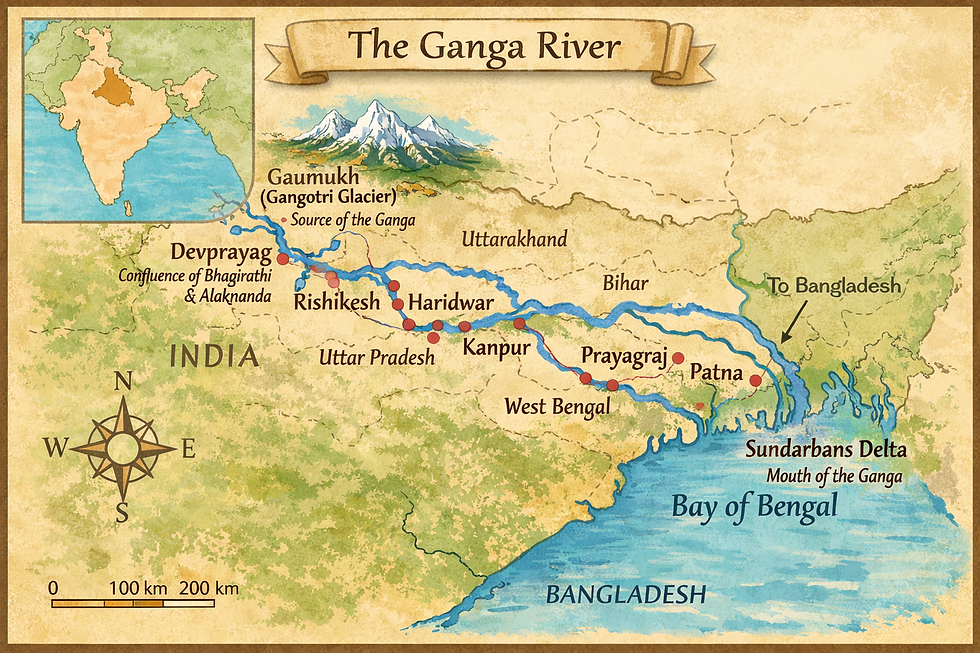
The River Ganga is known to be the most sacred river in India and holds immense religious, cultural, and spiritual significance. The River Ganga holds immense value in Hinduism and flows for approximately 2,525 kilometres, making it one of the longest rivers in India. It originates from Gaumukh near Gangotri in Uttarakhand and flows through several northern Indian states including Uttarakhand, Uttar Pradesh, Bihar, Jharkhand, and West Bengal before entering Bangladesh and finally emptying into the Bay of Bengal. Along its course, the river passes through major cities such as Rishikesh, Haridwar, Kanpur, Prayagraj, Varanasi, Patna, and Kolkata.
The Mother river of India- Ganga in Uttarakhand
River Ganga in Uttarakhand at several sacred and scenic locations. Popular places include
Gangotri, where pilgrims visit the origin shrine
Devprayag, where the river takes the name Ganga
Rishikesh, known for yoga, river rafting, and spiritual retreats;
Haridwar, famous for the evening Ganga Aarti at Har Ki Pauri.
These destinations are well connected by road from Dehradun, Rishikesh, and Haridwar, making them easily accessible for pilgrims and tourists.

FAQ's
1. Why is the Ganga River so famous?
The Ganga River is famous for its religious, cultural, and historical significance in India. It is considered the holiest river in Hinduism and is believed to cleanse sins and grant spiritual purification. The river also supports millions of people by providing water for agriculture, drinking, and daily livelihood, while flowing past several sacred cities such as Haridwar, Rishikesh, Varanasi, and Prayagraj.
2. Is the Ganga River clean now?
The cleanliness of the Ganga River has improved in several areas due to government initiatives such as the Namami Gange Programme, which focuses on reducing pollution and improving sewage treatment. However, certain stretches of the river still face pollution challenges due to industrial waste, sewage discharge, and religious offerings.
3. Where does the Ganga River start and end?
The Ganga River originates from Gaumukh, the snout of the Gangotri Glacier in Uttarakhand, where the Bhagirathi River begins. It officially becomes the River Ganga at Devprayag after the confluence of the Bhagirathi and Alaknanda rivers. The river flows through northern India and eventually empties into the Bay of Bengal through the Sundarbans delta.
4. Can you swim in the Ganga River?
Swimming in the Ganga River is allowed in certain designated and safe areas such as Rishikesh and Haridwar, where visitors often take ritual dips. However, strong currents, fluctuating water levels, and safety concerns make swimming unsafe in many stretches of the river. Visitors are advised to follow local safety guidelines.
5. What does the Ganga River map show?
A Ganga River map shows the river’s origin at Gangotri, its route through northern India, major tributaries, cities along its course, and its final drainage into the Bay of Bengal. It helps travellers and researchers understand the geographical and cultural importance of the river.
6. What is the route of the Ganga River?
The Ganga River begins at Gaumukh near Gangotri, becomes the Ganga at Devprayag, and flows through Uttarakhand, Uttar Pradesh, Bihar, Jharkhand, and West Bengal before entering Bangladesh and merging into the Bay of Bengal.
7. What is the history of the Ganga River?
The Ganga River has been mentioned in ancient Hindu scriptures such as the Vedas, Ramayana, and Mahabharata. It has been a centre of civilisation, trade, and spiritual practices for thousands of years. Many ancient cities and pilgrimage sites developed along its banks.
8. Through which states does the Ganga River flow?
The Ganga River flows through the Indian states of Uttarakhand, Uttar Pradesh, Bihar, Jharkhand, and West Bengal before entering Bangladesh.
9. What causes pollution in the Ganga River?
Pollution in the Ganga River is mainly caused by untreated sewage, industrial discharge, plastic waste, and religious offerings. Government and environmental organisations are actively working to reduce pollution and restore the river’s ecological balance.
If you need more information or would like personalised assistance in planning your journey across Uttarakhand, feel free to contact us at contact@mapchemy.com — we’re here to help you craft the perfect travel experience. And you can also visit our website www.mapchemy.com.


Comments