
The Badrinath Blueprint: Everything You Need to Know for the Char Dham Yatra
- Feb 12
- 6 min read
Updated: Apr 14
Content
Introduction
Badrinath is one of the pilgrimage of char dham. Badrinath is one of the holiest shrines for Vaishnavites and is among the 108 Divya Desams dedicated to Lord Vishnu. Located in the Chamoli district of Uttarakhand at an altitude of approximately 3,133 metres, the temple is situated along the banks of the Alaknanda River and surrounded by the Nar and Narayan mountain ranges. It forms an essential part of the Char Dham Yatra, one of the most sacred pilgrimage circuits in Hinduism.

History
The town of Badrinath is also part of the sacred Panch Badri temples, which include Yog Dhyan Badri, Bhavishya Badri, Adi Badri, and Vriddha Badri, along with the main Badrinath Temple. Each of these temples represents a different spiritual form of Lord Vishnu and holds unique mythological and religious importance. Yog Dhyan Badri is associated with meditation and spiritual practices, Bhavishya Badri is believed to be the future seat of Lord Vishnu, Adi Badri represents the ancient worship of Vishnu, and Vriddha Badri symbolises the aged or eternal form of the deity.
According to Hindu mythology, Lord Vishnu performed deep meditation at Badrinath while Goddess Lakshmi protected him in the form of a Badri tree, which is believed to be the origin of the temple’s name. The shrine was re-established by Adi Shankaracharya during the 8th century, helping revive pilgrimage traditions in the Himalayan region. Today, Badrinath attracts thousands of devotees and travellers each year who visit the temple seeking spiritual blessings, religious fulfilment, and the serene beauty of the Himalayas.
Places to visit in Badrinath, Char Dham Yatra
Tapt Kund
Tapt Kund is a natural geothermal hot water spring located just below the Badrinath Temple near the banks of the Alaknanda River. The water temperature of the kund remains warm throughout the year, even during freezing winter conditions in the Himalayan region.
Devotees traditionally take a ritual bath in Tapt Kund before entering the Badrinath Temple, as it is believed to purify the body and soul. The kund is considered spiritually sacred and is associated with Lord Agni, the Hindu god of fire. Separate bathing areas are arranged for men and women, and the kund remains one of the most visited religious spots in Badrinath.
Mana Village
Mana Village is located approximately 3 km from Badrinath and is popularly known as the last village of India before the Indo-Tibetan border. The village is inhabited mainly by the Bhotia community, who are known for their rich cultural traditions and handicrafts.
Mana holds immense mythological importance. It is believed to be the place where Sage Vyasa composed the Mahabharata with the help of Lord Ganesha inside the Vyas Gufa (Vyasa Cave). Nearby attractions include Bheem Pul, a natural rock bridge believed to have been placed by Bhima from the Mahabharata to help Draupadi cross the Saraswati River. The Saraswati River, which originates near Mana, is another major attraction and holds strong spiritual significance.
Vasudhara Falls
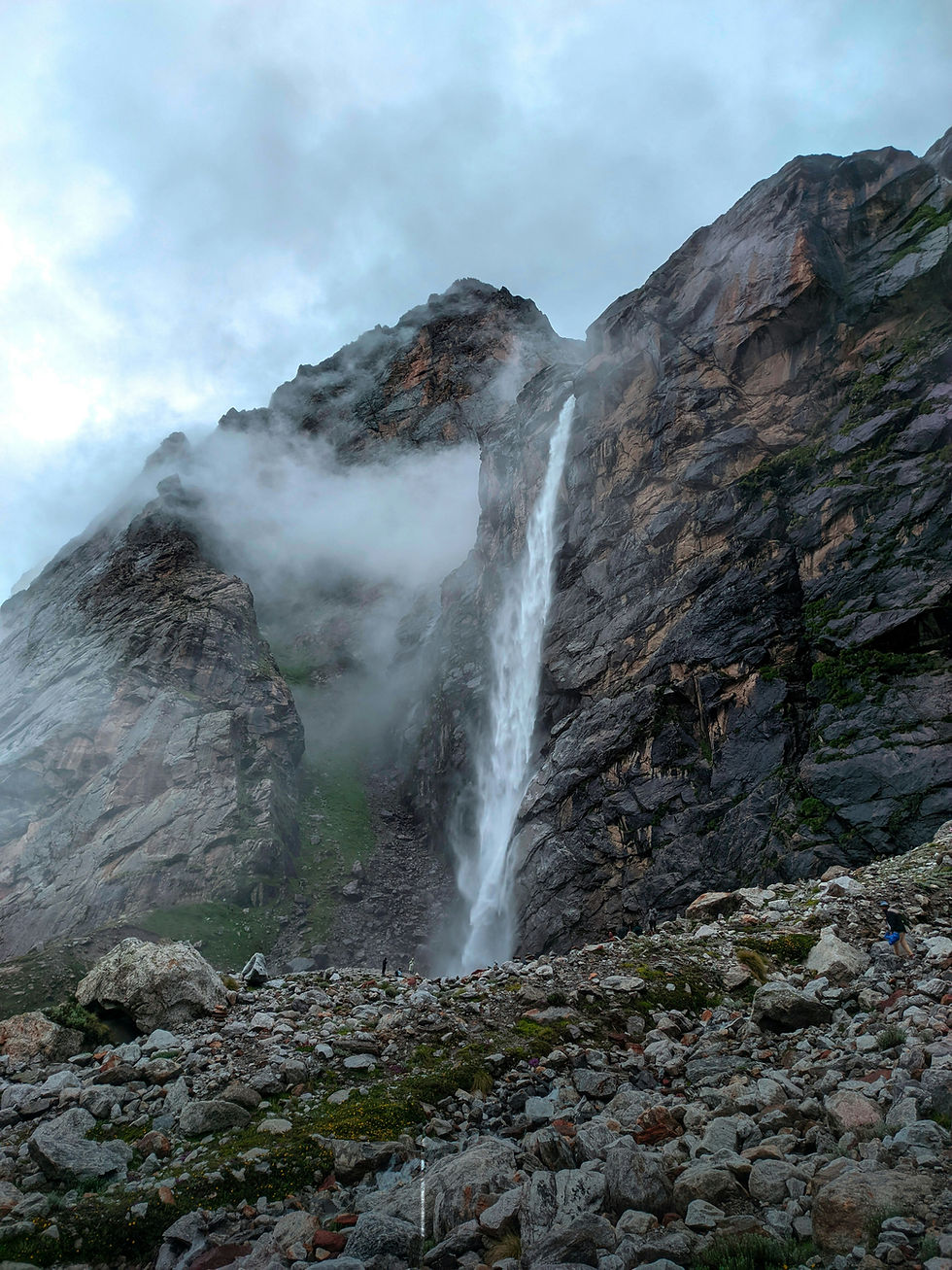
Vasudhara Falls is a magnificent waterfall located around 9 km from Badrinath and about 6 km from Mana Village. The waterfall cascades from a height of approximately 122 metres and is surrounded by dramatic Himalayan landscapes.
The trek to Vasudhara Falls is moderately challenging but extremely scenic, making it popular among trekkers and nature enthusiasts. According to local beliefs, the water of the falls does not fall directly on impure individuals, symbolising spiritual purity. The area offers breathtaking views of snow-covered peaks and lush valleys, providing a peaceful and refreshing environment.
Charan Paduka
Charan Paduka is a sacred pilgrimage site located approximately 3 km from Badrinath and is accessible through a moderately steep trekking route. The site is known for a large rock that is believed to bear the footprints of Lord Vishnu.
According to Hindu mythology, Charan Paduka marks the spot where Lord Vishnu first stepped on Earth. The trek to this site offers panoramic views of the Badrinath valley, the Alaknanda River, and surrounding Himalayan peaks. Devotees and trekkers visit Charan Paduka for both spiritual devotion and the scenic beauty of the location.
Best Time to Visit Badrinath
• May to June – Pleasant weather and peak pilgrimage season
• September to October – Clear skies and comfortable temperatures
• November to April – Temple remains closed due to heavy snowfall
The temple usually opens in May and closes around November every year.
Badrinath Weather
How to Reach Badrinath
By Air- The nearest airport is Jolly Grant Airport in Dehradun, located approximately 310 km from Badrinath.
By Train- The nearest railway station is Rishikesh, around 295 km away.
By Road- Badrinath is well connected by road to major towns including Rishikesh, Haridwar, and Dehradun. Pilgrims usually travel via Joshimath, which serves as the final major stop before reaching Badrinath.
Badrinath Location
Badrinath Opening date: Char Dham opening schedule

FAQ's
Why is Badrinath famous?
Badrinath is famous as one of the Char Dham pilgrimage sites and an important part of the Chota Char Dham Yatra in Uttarakhand. The temple is dedicated to Lord Vishnu, worshipped here as Badrinarayan. It is known for its spiritual importance, Himalayan beauty, and sacred hot spring called Tapt Kund.
Can we go to Badrinath now?
Badrinath Temple is usually open from April/May to October/November, depending on weather conditions. During winter, heavy snowfall forces the temple to close, and the idol is shifted to Joshimath for worship. It is best to check yearly opening and closing dates before planning a visit.
Is Badrinath a Shiva or Vishnu temple?
Badrinath is a Lord Vishnu temple. Lord Vishnu is worshipped in the form of Badrinarayan, seated in a meditative posture.
Which is higher, Kedarnath or Badrinath?
Kedarnath Height: Approx. 3,583 meters
Badrinath Height: Approx. 3,133 meters
Kedarnath is located at a higher altitude than Badrinath.
Where is Badrinath Temple located?
Badrinath Temple is located in Chamoli district of Uttarakhand, India, between the Nar and Narayan mountain ranges, along the banks of the Alaknanda River.
What is the distance to Badrinath?
Approximate distances to Badrinath from major cities:
Delhi: 530 km
Haridwar: 320 km
Rishikesh: 295 km
Dehradun: 335 km
Kedarnath to Badrinath: Approx. 220 km (by road via Rudraprayag)
What is the history of Badrinath Temple?
Badrinath Temple is believed to have been established by Adi Shankaracharya in the 8th century. According to Hindu mythology, Lord Vishnu meditated here, and Goddess Lakshmi took the form of a Badri tree to protect him from harsh weather. The temple has been rebuilt several times due to natural calamities.
What is the difference between Badrinath and Kedarnath?
Badrinath: Dedicated to Lord Vishnu and accessible directly by road.
Kedarnath: Dedicated to Lord Shiva and requires trekking from Gaurikund.
Both temples are part of the Chota Char Dham Yatra and hold immense religious importance.
Which God is worshipped in Badrinath?
Lord Vishnu is worshipped in Badrinath as Badrinarayan.
In which state is Badrinath located?
Badrinath is located in Uttarakhand, a northern state of India.
What is the official website for Char Dham registration?
The official website for Char Dham Yatra registration is https://registrationandtouristcare.uk.gov.in/. Pilgrims can register online, download registration slips, and access travel updates through this portal.
Are there alternative ways to register for Char Dham Yatra?
Yes, pilgrims can register through multiple channels:
Tourist Care Uttarakhand Mobile App
WhatsApp Registration: +91 8394833833
Physical Registration Counters available at major entry points and travel locations in Uttarakhand
Why is Char Dham registration important?
Registration helps the Uttarakhand government manage pilgrim safety, track travel movement, provide emergency support, and control crowd flow during the Yatra.
What documents are required for Char Dham registration?
Pilgrims need to provide any one valid government ID, such as:
Aadhaar Card
Voter ID
Driving License
Passport
Is Char Dham registration mandatory?
Yes, registration is mandatory for all pilgrims visiting Kedarnath, Badrinath, Gangotri, and Yamunotri to ensure safety and proper travel management.
Can pilgrims register offline for Char Dham Yatra?
Yes, offline registration is available at designated registration counters located across Uttarakhand, especially near major travel hubs.
How can pilgrims receive updates after registration?
Pilgrims can receive travel alerts, weather updates, and safety notifications through the Tourist Care Uttarakhand App, WhatsApp services, and official government communication channels.
Opening date of Badrinath?
23rd April 2026 will be the day of opening day ceremony
19. Opening dates of chota Char Dham?
Kedarnath-22nd April 2026
Badrinath-23rd April 2026
Yamnotri-19th April 2026
Gangotri- 19th April 2026
If you need more information or would like personalised assistance in planning your journey across Uttarakhand, feel free to contact us at contact@mapchemy.com — we’re here to help you craft the perfect travel experience. And you can also visit our website www.mapchemy.com


Comments